 Shuangye ebike

The distance you can travel on an off-road e-bike depends on a variety of factors, including the bike’s battery capacity, motor power, terrain type, rider weight, and riding style. Off-road e-bikes are designed to tackle rugged trails, steep inclines, and uneven surfaces, which means they often consume more energy compared to their road-going counterparts. Below is a comprehensive breakdown of the key elements that determine how far you can go on an off-road e-bike.
1. Battery Capacity: The Foundation of Range
The battery is the heart of any electric bike, and its capacity directly impacts how far you can travel. Battery capacity is measured in watt-hours (Wh), which indicates the total amount of energy stored in the battery.
- Common Battery Sizes for Off-Road E-Bikes:
- 300-400 Wh: Found in entry-level models, these batteries offer ranges of 20-40 miles under ideal conditions.
- 500-600 Wh: Mid-range batteries provide ranges of 40-70 miles, making them suitable for longer rides.
- 700-1,000 Wh: High-capacity batteries found in premium models can extend ranges to 60-100 miles or more.
Factors Affecting Battery Usage:
- Pedal Assist Levels: Lower assist levels (e.g., Eco mode) conserve battery life, while higher levels (e.g., Turbo mode) drain it faster.
- Throttle Use: Using the throttle instead of pedaling consumes significantly more energy, reducing range.
- Regenerative Braking: Some advanced e-bikes incorporate regenerative braking systems, which convert kinetic energy back into stored electrical energy during braking, slightly extending range.
 2. Terrain Type: The Wild Card
Off-road e-bikes are built to handle a wide range of terrains, but each type of terrain affects range differently.
a) Flat Trails
- On flat, smooth dirt trails, an off-road e-bike can achieve its maximum range because there is minimal resistance.
- Expected Range: With a 500Wh battery, you might cover 40-60 miles at moderate speeds with light pedal assistance.
b) Hilly Terrain
- Climbing steep hills requires more power from the motor, which reduces battery life.
- Expected Range: On hilly trails, the same 500Wh battery might only last 20-40 miles, depending on the severity of the inclines and your riding style.
c) Sandy or Muddy Surfaces
- Riding through sand, mud, or loose gravel increases rolling resistance, forcing the motor to work harder.
- Expected Range: In such conditions, even a high-capacity battery could drop to 15-30 miles per charge.
d) Rocky or Rooty Trails
- Technical trails with rocks, roots, and obstacles demand constant power adjustments, further depleting the battery.
- Expected Range: On rocky trails, expect a range of 20-35 miles with a 500Wh battery.
3. Motor Power: Balancing Speed and Efficiency
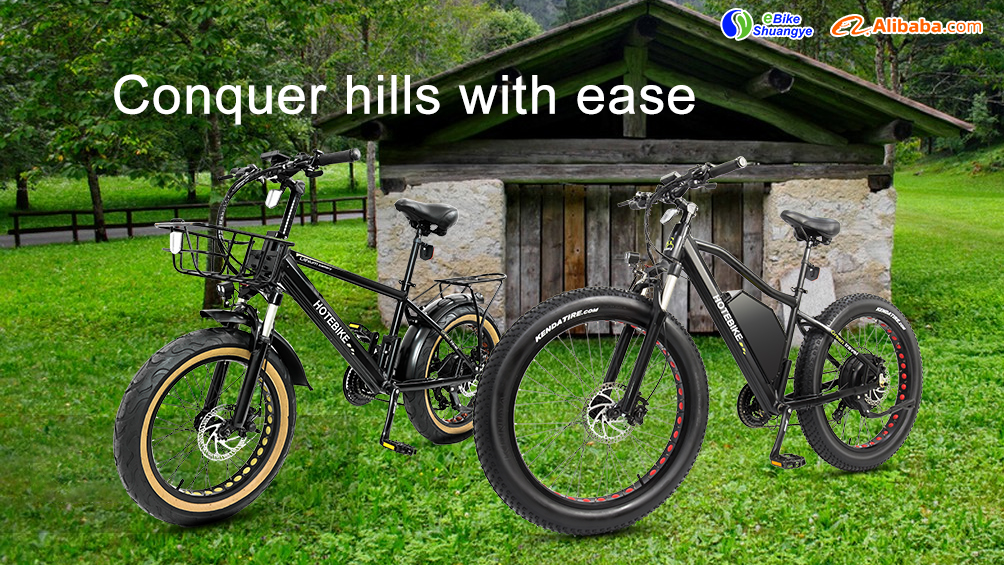
Off-road e-bikes typically come equipped with powerful motors ranging from 250W to 750W, depending on the model and intended use.
- Lower-Power Motors (250W-350W):
- These motors prioritize efficiency over raw power, making them suitable for lighter riders or less demanding terrains.
- Range: With a 500Wh battery, you might achieve 40-60 miles on easier trails but struggle on steeper inclines.
- Higher-Power Motors (500W-750W):
- Designed for heavy-duty use, these motors excel at climbing steep hills and navigating rough terrain.
- Range: While they offer superior performance, they also consume more energy, limiting range to 20-40 miles under challenging conditions.
Trade-Off Between Power and Range:
- More powerful motors allow you to conquer difficult terrains but sacrifice range. For example, a 750W motor might help you climb a steep hill, but it will drain the battery faster than a 350W motor.
 4. Rider Weight and Load Capacity
The combined weight of the rider, cargo, and accessories affects the bike’s range.
- Lightweight Riders:
- A lighter rider puts less strain on the motor, allowing the bike to travel farther on a single charge.
- Expected Range: A 120-pound rider might achieve 50-70 miles on flat trails with a 500Wh battery.
- Heavier Riders:
- Heavier riders require more power from the motor, especially when climbing hills or accelerating.
- Expected Range: A 200-pound rider might see their range reduced to 20-40 miles under similar conditions.
Impact of Accessories:
- Carrying additional gear, such as backpacks, panniers, or child seats, adds weight and reduces range. For every 10 pounds of extra load, expect the range to decrease by approximately 5-10%.
5. Riding Style: Aggressive vs. Efficient
Your riding style plays a significant role in determining how far you can travel.
- Aggressive Riding:
- Frequent throttle use, rapid acceleration, and high-speed descents consume more energy.
- Expected Range: Aggressive riding can reduce range by up to 30-50% compared to efficient riding.
- Efficient Riding:
- Consistent pedaling, using lower assist levels, and avoiding unnecessary throttle use maximize battery life.
- Expected Range: Efficient riding can increase range by up to 20-40% compared to aggressive riding.
Tips for Efficient Riding:
- Use Eco mode whenever possible.
- Pedal consistently to share the workload with the motor.
- Avoid sudden stops and starts, as they consume more energy.
- Plan your route to minimize elevation changes.
6. Maintenance Practices: Keeping Your Bike in Top Condition
Proper maintenance ensures your off-road e-bike performs optimally and achieves its maximum range.
a) Battery Care
- Store the battery in a cool, dry place when not in use.
- Avoid letting the battery fully discharge before recharging.
- Keep the battery between 20%-80% capacity for extended storage.
b) Tire Pressure
- Properly inflated tires reduce rolling resistance and improve efficiency.
- Check tire pressure regularly, especially after long rides or exposure to extreme temperatures.
c) Chain and Drivetrain Lubrication
- Clean and lubricate the chain and drivetrain to prevent friction losses.
- Replace worn-out chains promptly, as they can damage other components.
d) Brake Adjustment
- Ensure brakes are properly aligned and functioning smoothly.
- Worn brake pads increase drag, reducing efficiency.
7. Real-World Scenarios: Estimating Range
Let’s consider some real-world scenarios to estimate how far you can travel on an off-road e-bike:
Scenario 1: Leisurely Ride on Flat Dirt Trails
- Battery Size: 500Wh
- Motor Power: 350W
- Rider Weight: 150 pounds
- Terrain: Flat dirt trail
- Assist Level: Eco mode
- Expected Range: 50-70 miles
Scenario 2: Challenging Mountain Trail
- Battery Size: 600Wh
- Motor Power: 500W
- Rider Weight: 180 pounds
- Terrain: Steep inclines, rocky sections
- Assist Level: Turbo mode
- Expected Range: 20-35 miles
Scenario 3: Mixed Terrain Commute
- Battery Size: 700Wh
- Motor Power: 750W
- Rider Weight: 200 pounds
- Terrain: Combination of paved roads, gravel paths, and mild hills
- Assist Level: Normal mode
- Expected Range: 30-50 miles
8. Enhancing Range: Upgrades and Add-ons
If you frequently find yourself running out of battery during long rides, consider the following upgrades:
a) Larger Battery
- Installing a higher-capacity battery (e.g., upgrading from 500Wh to 700Wh) can significantly extend your range.
b) Auxiliary Battery
- Some e-bikes support dual-battery setups, allowing you to double your range.
c) Lightweight Components
- Replacing heavy parts with lightweight alternatives, such as carbon fiber wheels or aluminum frames, can improve efficiency.
d) Aerodynamic Improvements
- Adding fairings or wearing aerodynamic clothing reduces wind resistance, helping you travel farther.
9. Legal Considerations: Speed Limits and Classifications
Before embarking on long off-road adventures, ensure your e-bike complies with local regulations regarding speed and power limits.
- Class 1 E-Bikes: Pedal-assist only, with no throttle. Maximum assisted speed of 20 mph.
- Class 2 E-Bikes: Include a throttle, also capped at 20 mph.
- Class 3 E-Bikes: Can reach speeds up to 28 mph with pedal-assist but do not have a throttle.
Exceeding these limits may restrict where you can ride your e-bike.
Conclusion
The distance you can travel on an off-road e-bike varies widely depending on factors like battery capacity, motor power, terrain type, rider weight, and riding style. Under optimal conditions, a mid-range off-road e-bike with a 500Wh battery might cover 40-70 miles, while challenging terrains could reduce this to 20-40 miles. By practicing efficient riding techniques, performing regular maintenance, and considering upgrades when necessary, you can maximize your bike’s range and enjoy extended adventures in the great outdoors. Remember, understanding your specific setup and adjusting your expectations accordingly is key to getting the most out of your off-road e-bike.